


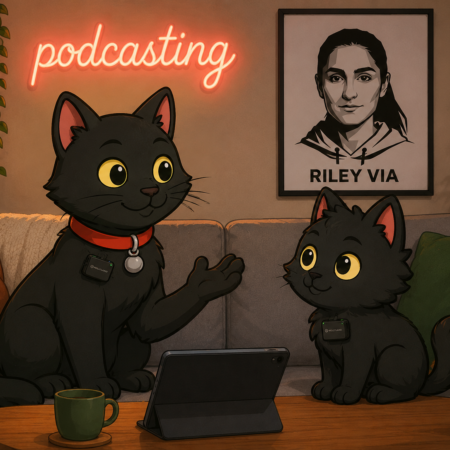

There was a time when podcasting felt experimental. A side project. A niche hobby dominated by tech enthusiasts, comedians, and long-form interview shows.
That time has passed.
New UK research presented at The Podcast Show London suggests podcast advertising is no longer a fringe media channel. It is now competing directly with traditional broadcast platforms for attention, recall, and influence. According to research from Sounds Profitable and UK research firm Sound Insights, 43% of British adults now listen to ad-supported podcasts monthly, while nearly 80% of podcast listeners recalled hearing a podcast advert within the previous week.
That matters.
But perhaps more interesting is why it matters.
Because the real story is not advertising.
The real story is trust.
Podcasting Does Something Traditional Advertising Often Cannot
Most advertising interrupts.
Podcasts accompany.
That distinction changes everything.
A podcast is often listened to while walking the dog, driving to work, cooking dinner, sitting on a train, or winding down at night. It is personal. The voice is directly in the listener’s ear. Over time, the presenter stops feeling like a broadcaster and starts feeling familiar.
Not in a manipulative way.
In a human way.
That familiarity creates something many modern marketing channels struggle to achieve: sustained attention.
The UK study found that more than half of podcast listeners tune in daily or almost daily. This is not passive scrolling. It is routine behaviour.
For small businesses especially, this matters far more than raw reach.
A local business does not necessarily need a million impressions. It needs a smaller audience that actually listens, remembers, and trusts.
Podcasting appears to deliver exactly that.
The “Higher Bar” Problem
One particularly interesting point from the research was the suggestion that British audiences are not resistant to advertising — they simply hold it to a higher standard.
That observation feels important beyond podcasting.
Consumers are increasingly exhausted by aggressive marketing tactics. Endless funnels. Artificial urgency. Fake authenticity. Automated spam disguised as “engagement”.
Podcasting tends to work best when it avoids all of that.
Listeners can detect insincerity remarkably quickly in audio. A forced sponsorship read or obviously scripted enthusiasm often feels awkward rather than persuasive.
Ironically, this is precisely why podcasts can become so commercially effective when done properly.
People respond to authenticity because authenticity is now relatively rare.
Why Small Businesses Should Pay Attention
Large corporations often think in terms of campaign scale.
Small businesses should think in terms of relationship depth.
A well-produced podcast allows a business owner to demonstrate expertise, personality, consistency, and humanity over time. It creates repeated contact without constantly “selling”.
That is a very different model from social media algorithms, where visibility can disappear overnight.
Podcasting also rewards niche knowledge.
A small independent garage discussing electric vehicle myths.
A local estate agent exploring regional housing trends.
A driving instructor explaining real-world road safety.
A bakery talking about traditional recipes and food culture.
None of these need Hollywood production values.
They need genuine interest.
The businesses that succeed in podcasting are often the ones that stop trying to sound like advertisements and start sounding like people worth listening to.
Attention Is Becoming More Valuable Than Reach
Modern digital marketing often chases visibility while ignoring engagement.
Podcasting flips that equation.
Older research commissioned by the Guardian found podcast advertising generated higher levels of listener attention than television or radio advertising. More recent industry research also suggests podcast audiences show unusually strong advert recall and trust compared with many other media channels.
Again, this should not really surprise anyone.
A person half-watching television while scrolling their phone is not engaged.
A person choosing to spend 45 minutes listening to a presenter discuss a subject they genuinely care about is.
The internet spent years optimising for clicks.
Podcasting quietly optimised for attention.
The Mistake Many Businesses Still Make
The temptation, especially once sponsorship enters the conversation, is to turn podcasts into extended commercials.
That usually fails.
People do not subscribe to a podcast to hear adverts disguised as conversations. They subscribe because they enjoy the host, the stories, the insight, the humour, or the expertise.
The commercial side works best when it remains secondary.
In many ways, the best business podcasts do not feel like marketing at all.
They feel useful.
Or entertaining.
Or comforting.
Or interesting enough that listeners voluntarily return.
That is a completely different psychological relationship from traditional advertising.
Podcasting Is Also Quietly Democratising Media
For decades, broadcasting required infrastructure, gatekeepers, studios, licences, and substantial budgets.
Now, a small business owner with a decent microphone, a quiet room, and something worth saying can build a highly engaged audience from scratch.
That shift is profound.
Podcasting has lowered the barrier to entry for long-form communication at exactly the moment audiences are becoming increasingly sceptical of polished corporate messaging.
The result is a medium where personality often beats production budgets.
That is a rare opportunity for independent creators and smaller brands.
The Real Value May Not Even Be Direct Sales
One of the most overlooked aspects of podcasting is its cumulative effect.
A listener who hears a presenter every week for six months develops familiarity.
Familiarity builds trust.
Trust reduces hesitation.
By the time that listener eventually needs the service being discussed, the decision may already feel partially made.
Not because they were pressured.
Because the business already feels known.
That is incredibly difficult to achieve through banner adverts or fleeting social posts.
Podcasting operates more like relationship-building than traditional marketing.
And perhaps that is why it is proving so resilient.
The Future of Podcasting May Be Smaller, Smarter, and More Human
The future probably does not belong solely to giant celebrity podcasts with enormous production budgets.
It may equally belong to smaller, focused, highly trusted voices serving specific audiences exceptionally well.
That is encouraging for small businesses.
You do not need millions of listeners.
You need the right listeners.
And you need something worth saying when they arrive.